

Give unto Caesar: the Julius Caesar Denarius
28/03/2025 | George Champ

This fine example of a Julius Caesar Denarius is going under the hammer in our much-anticipated Coins, Watches and Jewellery timed auction. It features as lot 2, and can be viewed here.
Come with us as we take a closer look at this pocket-sized piece of history.
Lot 2, the Julius Caesar Denarius
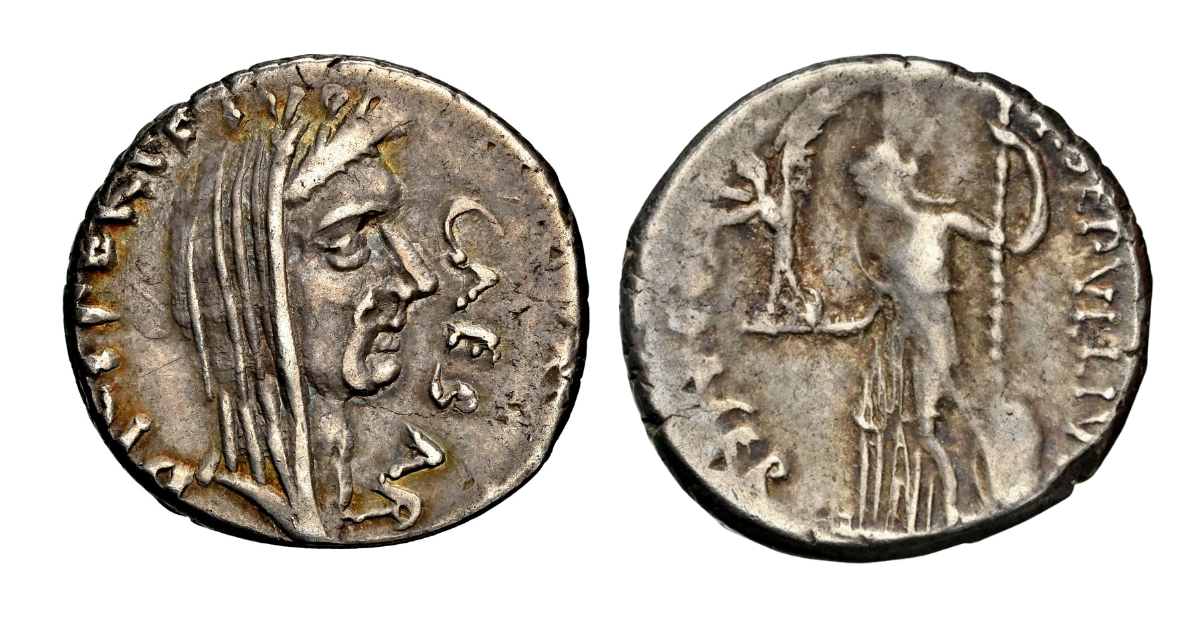
It was minted by P. Sepullius Macer, one of the 4 moneyers active in Rome during the late Republic. At over 2,000 years old, it is a captivating piece. One side of the coin features the portrait of a veiled and wreathed figure, one of the most famous men to have ever lived - Julius Caesar.
The Julii & the Foundation Myth
The reverse of the coin depicts Venus holding Victory. The choice to depict Venus was itself meaningful, drawing on the family legend that the Julians were descendants of the goddess herself.
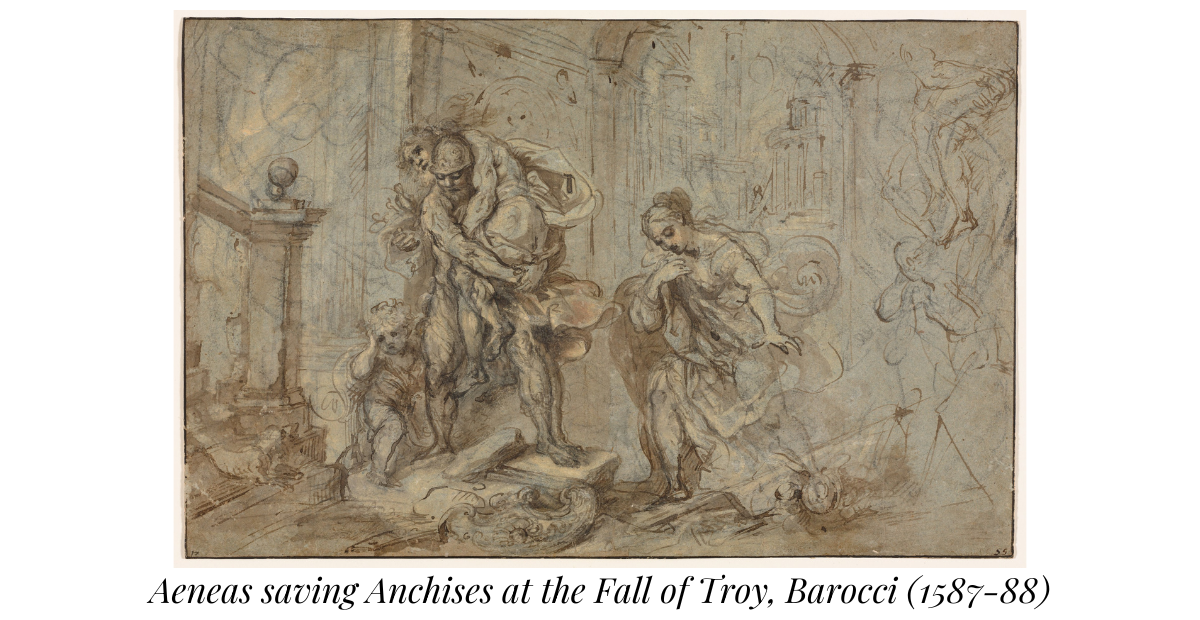
The legend goes that the Julian line could be traced back to Venus through her legendary son, Aeneas. Aeneas is a key figure in the foundation myth of Rome, who supposedly led Trojan refugees from their destroyed city in the tumultuous aftermath of the Trojan war. Aeneas and his crew settled in the verdant land of modern-day Italy, becoming the early ancestors of the Romans.
As part of the Julian clan, Caesar was careful to cultivate this link to his divine lineage, featuring and honouring Venus in many of his works.
Caesar & Republican traditions
On the coin, Caesar is represented in the verist style popular in the Roman Republic. Verism centres around depicting the aged experience of the subject - think wrinkles and heavy skin folds.
In the Roman Republic, men of the senatorial class were confined by the Cursus Honorum, or career ladder, only able to gain positions of status after a certain age. For example, the prestigious office of Consul had a minimum age requirementof 42 years. It was a system in which age was equal to experience and ability. In such a society, a representation of maturity conveyed a sense of the enhanced status gained over a lifetime.
Although Caesar adopted the traditional and popular veristic art style, he also broke the mould. Indeed, Caesar was the first Roman leader to feature his own portrait on coins, setting a precedent that would, of course, be picked up by future leaders.
Previously, minting someone's portrait was an honour granted posthumously. Minting your own image in life in fact paralleled the personal glorification more commonly associated with kings - whom the Romans had proudly driven out centuries before. As such, any echoes of kingship were anathema to the Roman Republic. It was his slide towards overt kingship which led to Caesar’s brutal murder on the Ides of March in 44 BCE, by the Liberatores, or liberators.
A family affair: from Caesar to Octavian
The exact background of this coin has become obscured by the mists of time. The veiled and wreathed depiction seen here is typically associated with the deceased. As such, it is possible that Caesar's successor, Octavian, issued the coin. As Caesar's adopted son and successor, the imagery seen here gains further potency. Immediately after Caesar's murder, Rome was plunged into civil war as factions grappled for power. Power struggles emerged at first between the Liberatores and Second Triumvirate, and later between Octavian and Mark Antony. Part of this contest was played out through the minting of coins, carefully designed to send a favourable message to the masses.
In this context, the representation of Caesar on the coin may have been the young Octavian's ways of emphasising his link to the great Caesar, as well as the divine Julian ancestry. Indeed, Octavian quickly began signing himself with the title 'Divi Filius', son of a god.
Octavian/Augustus so successfully wielded art and culture to send out political messages, that a man who was brutally murdered by his peers was later celebrated as a great Roman. The honorific 'Caesar' became traditionally incorporated into Roman imperial titles. Indeed, this tradition has continued to recent times - both the titles Kaiser and Tsar derive from 'Caesar'.
From the vantage point of the 21st century, we know that Caesar's life and career enabled the transition to the Roman empire by his adopted son and successor, Octavian/Augustus, the first Princeps, or Emperor. The rest, so they say, is history.
Holding history
A figure whose shadow is cast across the ages of European history, Caesar is one of the most recognisable and famed men of history. Contemporary objects make the distant past vivid and tangible. To hold a coin that passed through the palms of ancient Romans is to become a part of its history.
The Julius Caesar Denarius coin is lot 2 in the Coins, Watches and Jewellery timed auction, which is online and open for bidding now until 17:00 BST on 9th April.
Update: lot 2 hammered at £1,620 (excluding commission).